Table of Contents
Key Takeaways
- Roundabouts are circular intersections designed to improve safety by reducing high-impact crashes, but accidents can still happen due to driver confusion or rule violations.
- Common causes of roundabout crashes include failing to yield, incorrect lane use, speeding, distracted driving, and improper exiting from the circle.
- Fault in roundabout accidents depends on right-of-way rules, but it can be complicated in multi-lane situations where multiple drivers may share responsibility.
- The Odierno Law Firm helps injured clients investigate roundabout crashes, gather key evidence like video and witness statements, and pursue compensation from at-fault drivers and insurance companies.
Roundabouts are generally considered safer than traditional intersections. Studies show they reduce severe crashes by eliminating dangerous T-bone and head-on collisions that commonly occur at standard intersections. However, accidents still happen at roundabouts, and when they do, they can involve unique challenges for determining fault and liability.
Understanding how roundabouts work, what causes accidents in roundabouts, and what to do if you’re involved in a car crash can help you stay safe and protect your legal rights.
Legally Reviewed By
Scott F. Odierno
Attorney/Partner

Long Island accident lawyer Scott F. Odierno was born in Bronx, New York, in 1967, and moved to Long Island in 1973. He obtained a Bachelor of Arts in Medieval and Renaissance History from Brown University in 1989. At Brown, Scott was captain of the Baseball team and a First Team All-Ivy catcher. Scott joined The Odierno Law Firm, P.C. upon graduating from New York Law School in 1992. His practice is concentrated in two fields: Personal Injury and No-Fault litigation. He is admitted to practice in Federal Court in both the Eastern and Southern Districts of New York in addition to all New York State Courts.


What is a Roundabout?
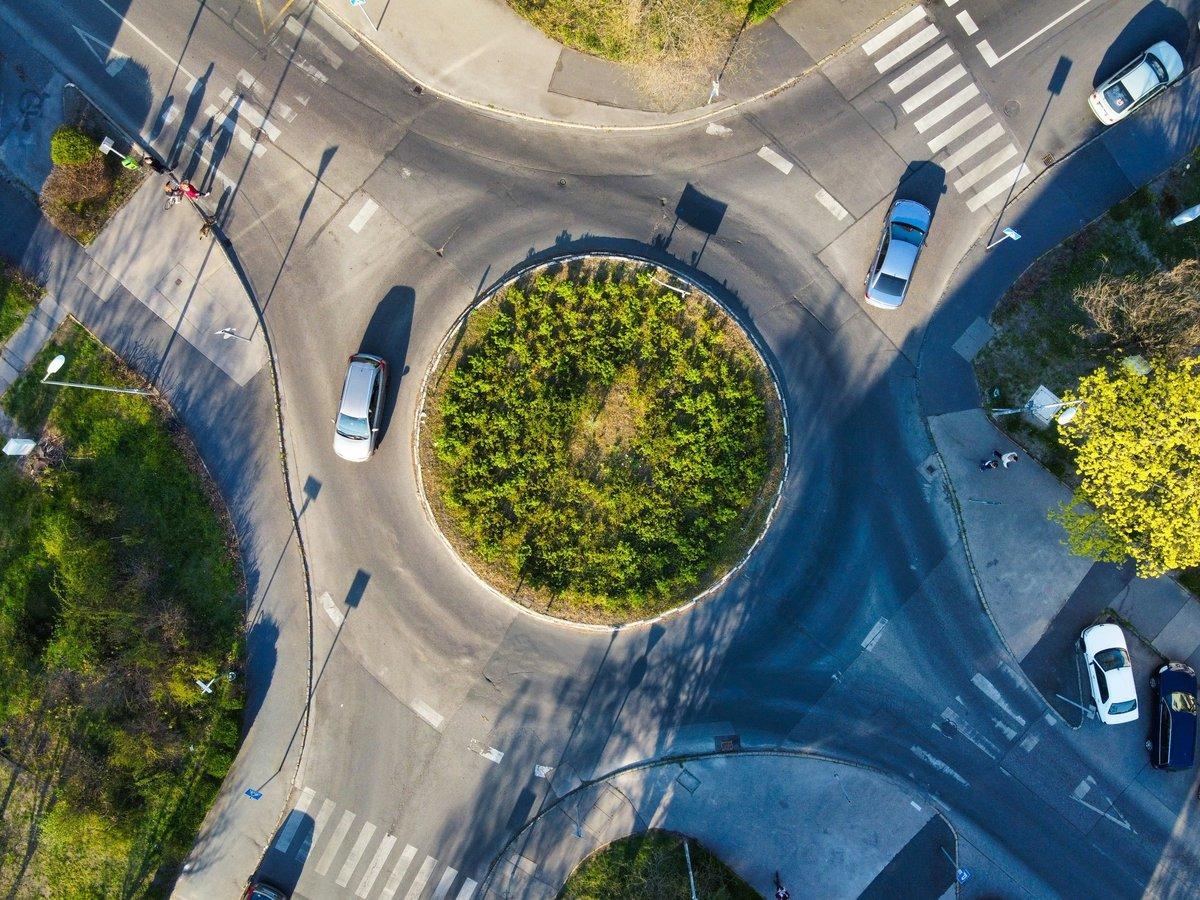
A roundabout is a circular intersection where traffic flows continuously in one direction around a center island. Unlike traditional intersections controlled by traffic signals or stop signs, roundabouts require drivers to yield before entering and follow the circle counterclockwise until reaching their desired exit.
The primary purpose of a roundabout is to improve traffic flow and safety. The design also forces vehicles to slow down, reducing the severity of collisions when they do occur.
Key rules for using roundabouts include:
- Yield to traffic already in the circle. Vehicles inside the roundabout have the right of way. You must wait for a safe gap before entering.
- Choose the correct lane before entering. If you’re taking the first exit, use the right lane. For exits beyond the first, use the left lane and move right as you approach your exit.
- Signal your intentions. Use your right turn signal when preparing to exit the roundabout to alert other drivers.
- Maintain a steady, slow speed. Roundabouts are designed for speeds between 15 and 25 mph.
- Never stop inside the roundabout. Once you’ve entered, keep moving with the flow of traffic.
- Watch for pedestrians and cyclists. Yield to pedestrians in crosswalks before entering and exiting the roundabout.
Despite their safety benefits, roundabouts can confuse drivers unfamiliar with them, particularly those accustomed to traditional intersections. Some drivers stop when they should yield, others fail to yield when they should, and when multiple lanes are present, many misunderstand which lane to use for their intended exit.
This confusion increases the risk of accidents, especially in areas where roundabouts are relatively new or uncommon.
Common Causes of Roundabout Crashes
While roundabouts reduce certain types of crashes, they introduce their own collision risks. Understanding the most common causes of roundabout accidents can help drivers avoid dangerous mistakes.
- Failure to yield or improper entry to the roundabout
- Speeding or misjudging gaps
- Incorrect lane usage
- Stopping inside the roundabout
- Distracted driving
- Poor visibility
- Driving the wrong way
Who is At Fault in a Roundabout Accident?
Determining fault in a roundabout accident depends on New York’s traffic laws and the specific circumstances of the crash. Generally, drivers who violate right-of-way rules are responsible for resulting collisions. New York law requires drivers to yield before entering, so collisions caused by improper entry typically result in liability for the vehicle entering.
However, fault isn’t always straightforward. A driver already in the roundabout may share liability if they were speeding, changed lanes improperly, or failed to signal their exit. Multi-lane roundabouts create particular complications compared to single-lane roundabouts, as drivers must maintain their lanes and check blind spots before exiting. If a driver in the inside lane cuts across the outer lane to exit without checking for other vehicles, they may be held partially or fully responsible for the collision.
Your roundabout accident attorney can review and present evidence to demonstrate fault for your crash and injuries. Critical evidence in roundabout cases might include:
- Photos of vehicle damage, the accident scene, and the roundabout layout help reconstruct what happened and demonstrate which rules were violated.
- Witness statements from other drivers or pedestrians provide independent accounts of the collision.
- Dashcam footage offers objective evidence of both drivers’ actions before and during the crash.
- Police reports document the investigating officer’s assessment of the accident, including any citations issued.
- Traffic camera footage may capture the collision if cameras are present at the roundabout.
Having a law firm gather and preserve this evidence quickly after a roundabout accident strengthens your ability to prove fault and recover compensation.
The Reaction Point

Every case has its variables, including negligence, evidence, medical complexity, and stakes. The Odierno Law Firm acts as the reagent that brings these elements together and sets the reaction in motion. The result is the outcome we aim for, a favorable verdict or settlement for our clients.
Tips for Staying Safe at Roundabouts
You can reduce your risk of being involved in a roundabout accident by following these safety tips:
- Slow down as you approach and look for yield signs
- Check for pedestrians and cyclists before entering
- Yield to all traffic already in the circle
- Choose your lane before entering based on your intended exit
- Signal your exit to warn other drivers
- Maintain a steady, slow speed while circulating
- Stay in your lane and avoid sudden lane changes
- Never stop inside the roundabout unless traffic requires it
- Watch for trucks and large vehicles that may need extra space
- Be patient with confused or hesitant drivers
No matter how cautious you are, other drivers can still violate the rules and cause accidents in roundabouts.
What to Do After a Roundabout Accident
If you’re involved in an accident at a roundabout, taking the right steps protects your health and legal rights:
- Check for injuries and call 911 if anyone needs medical attention
- Move vehicles out of the roundabout if possible to prevent additional collisions
- Call the police to report the accident and obtain an official report
- Exchange information with other drivers, including names, contact details, insurance information, and license plate numbers
- Document the scene with photos of vehicle damage, the roundabout layout, road conditions, and any visible injuries
- Gather witness contact information from anyone who saw the accident
- Seek medical attention even if you don’t feel injured—some symptoms appear hours or days later
- Notify your insurance company about the accident
- Consult a roundabout accident attorney before giving recorded statements or accepting settlement offers

Dedicated To You
We are committed to getting you the compensation you deserve for the injuries you have sustained. We are determined to fight for you. We have a no recovery, no fee policy, so you don’t pay unless we win.
Hurt in a Roundabout Accident? Our Long Island Car Accident Lawyers Can Help
Roundabout accidents can result in significant injuries, vehicle damage, and liability questions. If you’ve been hurt in a roundabout accident on Long Island, The Odierno Law Firm can help you navigate the claim process, gather evidence to prove fault, and pursue the compensation you deserve. Our experienced car accident attorneys understand the unique challenges of roundabout collisions and fight to protect your rights. Contact us today for a free consultation to discuss your case.