Table of Contents
Key Takeaways
- In New York, most injured drivers initially rely on their own no-fault insurance after a sideswipe accident, but serious injuries may allow them to pursue a personal injury claim against the at-fault driver.
- Fault in a sideswipe accident is determined by the facts of the crash, with common causes including unsafe lane changes, improper merging, distracted driving, and failure to maintain a lane.
- Evidence such as vehicle damage, photographs, surveillance footage, witness statements, and police reports often plays a critical role in proving who caused a sideswipe collision.
Sideswipe accidents are among the most common types of car crashes, but they are not always as straightforward as they seem. Determining who was at fault can be challenging, especially when both drivers have conflicting accounts of what happened, and New York has unique rules surrounding who pays after an accident. In this article, we’ll explain what causes most sideswipe accidents, how fault is determined, and what your options may be if you’ve been injured.
Click here to schedule a confidential consultation or call our office at 631-752-8580.
Legally Reviewed By
Stephanie N. Voses Dean
Attorney

Stephanie N. Voses Dean was born in New Hyde Park and graduated St. John’s University in 1995 earning a Bachelor of Science with Honors. She received her paralegal degree with distinction from C.W. Post University in 1996 and her Juris Doctorate from St. Johns University School of Law in 1999. At St. John’s she was Vice President of the Hellenic Association.
What Is a Sideswipe Accident?
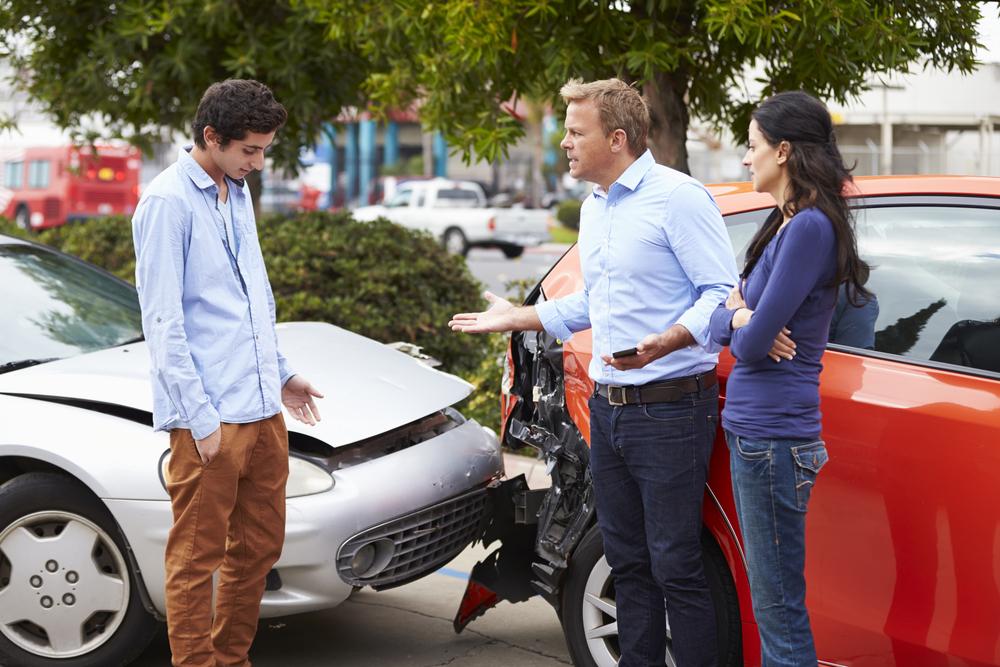
A sideswipe accident happens when two vehicles traveling alongside each other make contact along their sides. The impact may be brief, almost a glancing blow, or sustained enough to cause significant vehicle damage and loss of control.
These crashes generally fall into two categories. In same-direction sideswipes, both vehicles are traveling the same way, and one drifts or merges into the other’s lane. In opposite-direction sideswipes, the vehicles are headed toward each other, and one crosses over the center line or median. Opposite-direction crashes tend to produce more severe injuries because of the combined closing speed.
On Long Island, sideswipe accidents are especially common in certain locations and situations:
- Merging onto or off of parkways and expressways, including the LIE, Northern State, and Southern State Parkways
- Multi-lane roads where lanes narrow or shift
- Intersection approaches where drivers jockey for position
- Construction zones with reduced lane widths
One reason these crashes carry outsized risk is the chain reaction they can trigger. Even a low-speed sideswipe can cause a driver to overcorrect, cross into oncoming traffic, or collide with barriers or other vehicles.
What Causes Sideswipe Accidents?
The causes of sideswipe collisions almost always come down to a driver failing to maintain their lane or failing to check before moving into one. Some contributing factors are momentary lapses; others reflect persistent patterns of unsafe driving.
The most frequently cited reasons why sideswipe accidents occur include:
- Unsafe lane changes: Moving laterally without enough clearance or without signaling
- Failure to check blind spots: Mirrors alone don’t cover every angle, and failing to shoulder-check before merging is a common error
- Improper merging: Misjudging speed or spacing when entering a highway or expressway
- Distracted driving: Taking eyes off the road, even briefly, while texting, adjusting music, or looking at a GPS
- Speeding: Higher speeds reduce the margin for error and make course corrections harder
- Aggressive driving: Cutting off other drivers or forcing a lane change in heavy traffic
- Fatigued or impaired driving: Both conditions affect reaction time and lane-keeping ability
- Failure to maintain lane: Gradual drifting, sometimes without any lane change intention at all

Understanding the cause matters because it directly informs who bears legal responsibility for the crash.
Who Is at Fault in a Sideswipe Accident?
Fault in a sideswipe accident depends on the specific facts of how and where the collision occurred. In general, every driver has a duty to maintain their lane, signal before changing lanes, and confirm the move is safe before executing it. When someone fails that duty and causes a collision, they are typically the at-fault party.
Some scenarios make fault fairly clear. A driver who drifts across a lane divider without signaling is usually responsible. The same is true for a driver who merges without sufficient clearance or who attempts to pass another vehicle without leaving adequate space. A driver who crosses a center line into oncoming traffic is almost always at fault.
There are also some situations in which both drivers may have contributed to the collision, for example, when one driver was speeding, and the other made an unsafe lane change. This type of scenario can make a key difference when it comes to personal injury lawsuits because New York follows a pure comparative negligence rule. Under this framework, an injured person can still recover damages even if they were partly at fault, but their recovery will also be reduced by their percentage of fault. For example, a person found 20 percent at fault would receive 80 percent of the total damages awarded.
Who Pays for Damages After a Long Island Sideswipe Accident?
New York is a no-fault insurance state. This means that after most car accidents, injured drivers generally turn to their own Personal Injury Protection (PIP) coverage to pay for their medical expenses and a portion of their lost wages, regardless of who caused the collision. This applies whether they were at fault, the other driver was, or fault is unclear.
Property damage claims work differently. Damage to your vehicle is generally pursued against the at-fault driver’s liability insurance, not through your own no-fault coverage.
That being said, PIP isn’t always the only option. If your injuries are severe, you may have the right to step outside the no-fault system and file a personal injury lawsuit against the at-fault driver. To qualify, you must meet New York’s “serious injury” threshold, which includes conditions such as significant disfigurement, a fracture, permanent limitation of a body organ or member, or a medically determined injury that prevents normal activities for at least 90 days in the 180 days following the accident.
That matters because filing a lawsuit allows you to pursue compensation beyond what no-fault provides, including damages for pain and suffering, long-term medical costs, and full lost earnings. Understanding whether your injuries qualify is one of the first and most important questions to work through after a serious sideswipe crash.

Click here to schedule a confidential consultation or call our office at 631-752-8580.
How Is Fault Proven After a Sideswipe Accident on Long Island?
Establishing who caused a sideswipe crash requires pulling together multiple types of evidence. No single piece tells the whole story, but a complete picture can make fault difficult to contest.
The evidence most commonly used in these cases includes:
- Police accident report: Documents the responding officer’s observations, statements from both drivers, and any citations issued
- Vehicle damage patterns: The location and angle of damage on each vehicle can indicate which car moved into which lane
- Photographs and videos: Images taken at the scene capture lane markings, vehicle positions, road conditions, and visible damage
- Dashcam or surveillance footage: Video from either vehicle or nearby cameras can show exactly how the collision unfolded
- Witness statements: Bystanders or other drivers who saw the crash can corroborate or contradict each driver’s account
- Physical evidence from the roadway: Skid marks, debris fields, and paint transfer can help reconstruct the sequence of events
- Cell phone records: When distraction is suspected, records can confirm whether a driver was using their phone at the time of the crash
- Accident reconstruction: In seriously disputed cases, an expert may analyze all available data to provide a professional opinion on causation
How a Long Island Car Accident Lawyer Can Help
Even when a sideswipe accident appears to be clear-cut, resolving an injury claim is not always simple. Remember that once you step outside the no-fault system, you are dealing with the other driver’s insurance company, which does not have a contractual obligation to pay you for your injuries. They may attempt to assign an unfair share of blame to you for the accident, dispute the severity of your injuries, or even offer you a fast and low settlement in the hopes that you accept before you understand the true extent of your losses. That’s where having a car accident lawyer on your side can make a key difference.
A lawyer can assist you by:
- Investigating the accident and gathering evidence to establish fault before photographs, surveillance footage, witness memories, and other important evidence are lost.
- Calculating the full value of the claim by accounting for not only current medical bills and lost wages, but also future treatment, reduced earning capacity, and other losses that may not be immediately apparent.
- Handling negotiations with the insurance company to push back against efforts to shift blame, dispute the severity of the injuries, or pressure you into accepting less than your claim may be worth.
- Taking the case to court when necessary if the insurance company refuses to offer a fair settlement.
Click here to schedule a confidential consultation or call our office at 631-752-8580.
What to Do After a Sideswipe Accident on Long Island
The steps you take in the hours and days following a sideswipe collision matter, both for your health and for any potential claim. Here is what to do:
- Move to safety if your vehicle is drivable and it is safe to do so
- Call the police and wait for an officer to respond and document the scene
- Exchange information with the other driver, including insurance details and contact information
- Photograph and video the scene, including both vehicles, lane markings, and surrounding conditions
- Collect witness information from anyone who saw the crash
- Seek medical attention as soon as possible, even if you feel fine; some injuries don’t appear immediately
- Notify your insurance company, but keep your description of events factual and brief
- Avoid admitting fault or speculating about what happened, even in casual conversation
- Keep records of all medical visits, bills, and any time missed from work
Schedule a Free Consultation With a Long Island Car Accident Attorney
Sideswipe accidents may look straightforward from the outside, but they frequently involve real disagreements about fault, insurance coverage, and whether an injury is serious enough to support a personal injury claim. New York’s no-fault rules add another layer of complexity that can affect your options in ways that aren’t always obvious.
At The Odierno Law Firm, we work with injury victims on Long Island who have been hurt in car accidents. Since 1978, we have recovered more than $300 million for our clients. If you were injured in a sideswipe collision and have questions about your rights, we’re happy to talk through the details with you. Contact us today to schedule a free consultation with one of our car accident attorneys.